
If you work in or run a money service business, you deal with people every day who want to exchange currency, send money abroad, or make payments. These businesses are often called MSBs, short for Money Service Businesses. They include high-street currency exchange shops, online money transfer services, and companies that help people send money to family overseas.
One of the most important jobs these businesses have is checking that the customer is really who they say they are. This is called identity verification. In the past it was mostly done with paper documents. Today, more and more businesses are using digital methods. This blog explains why digital identity verification is becoming so important, how it works, what the UK rules say, and what it means for everyday money service businesses.
Why identity checks matter so much for money service businesses?
Money service businesses handle cash and move money quickly, sometimes across borders. Because of this, criminals sometimes try to use them to hide or move dirty money. That is why the UK has strict rules under the Money Laundering Regulations.
These rules say that businesses must:
- Find out who the customer is
- Check that the information is true
- Understand why the customer wants to use the service
- Keep watching the customer’s activity for anything unusual
This whole process is often called Know Your Customer (KYC) or Customer Due Diligence (CDD). If a business does not do these checks properly, it can face big problems – fines, loss of its licence, or even being cut off by banks.
In simple terms, identity verification is the first and most basic step. Without it, the rest of the checks become weak.
The old way of checking identity and its problems
For many years, the usual method was simple. A customer would show a passport or driving licence and sometimes a recent utility bill or bank statement. Staff would look at the documents, maybe take a photocopy, and keep the records.
This method still works in some cases, but it has clear problems:
- It is slow. Customers often have to wait or come back later.
- It is inconvenient. People do not always carry the right documents.
- Fake documents can look real. Some forgeries are very good.
- It creates lots of paper and filing work.
- Online or phone customers find it especially hard because they cannot show original documents face-to-face.
Many customers get frustrated and give up. For a busy money transfer service, this means lost business.
What digital identity verification means?
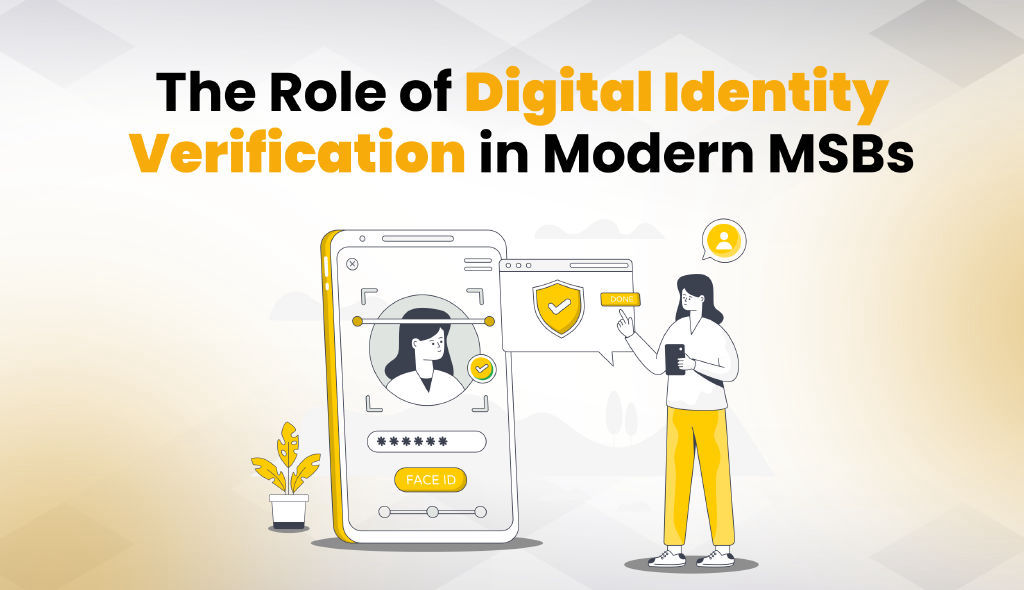
Digital identity verification uses technology instead of (or alongside) paper documents. A customer can usually complete the check using a smartphone or computer.
Typical steps look like this:
- The customer takes a clear photo of their passport or driving licence using their phone camera.
- The system checks if the document is genuine by looking at security features, holograms, and other details that are hard to fake.
- The customer takes a short video or selfie.
- The system compares the face in the selfie with the photo on the ID document.
- In some cases, the system also checks information against trusted databases or uses bank data (with the customer’s clear permission).
When everything matches, the check is complete – often in under a minute.
Some newer systems go even further. They allow customers to confirm their identity through their bank app, using information the bank already holds and trusts. This can remove the need to upload documents at all.
UK Rules and Recent Changes
The main law is still the Money Laundering Regulations 2017. These rules allow electronic checks as long as they come from a reliable and independent source and give a good level of confidence.
In February 2026, the government made things clearer. HM Treasury and the Department for Science, Innovation and Technology published joint guidance. It says that digital verification services which are properly certified and listed on the official government register can be used for identity checks under the regulations.
You can read the official guidance here:
Using digital identities with the Money Laundering Regulations
And more explanation from the government digital identity team:
How digital identity can support compliance with the UK’s Money Laundering Regulations
This is helpful because it gives businesses more confidence. However, it does not mean digital checks cover everything. Businesses still need to look at the full picture – the customer’s risk level, the reason for the transaction, and ongoing monitoring.
Clear benefits for money service businesses
Digital identity verification brings practical advantages.
Faster customer onboarding
A person who wants to send money or exchange currency can often finish the identity check in less than a minute. This means fewer people abandon the process halfway through.
Better experience for customers
People is used to doing things on their phones. A smooth digital check feels modern and convenient, especially for younger customers or those who live far from a physical shop.
Stronger protection against fraud
Good digital systems can spot fake documents and unusual patterns more effectively than the human eye alone. This helps protect the business and its honest customers.
Lower operating costs
Staff spend less time checking documents by hand and filing paperwork. This frees them up for other work or allows the business to handle more customers with the same team.
Clearer records for regulators
Digital systems create a clear electronic trail showing what was checked, when, and the result. This makes inspections and audits easier.
Realistic example
Think of an online money transfer service used by people sending money to relatives abroad. In the past, many customers would start the process, get stuck uploading documents, and leave. With a good digital system, most can finish the check quickly on their phone. The business gains more completed transfers and fewer support calls about failed checks.
Another example is a high-street currency exchange that also offers online services. Walk-in customers can still show physical documents if they prefer, while online customers use the digital route. This gives people choice while keeping standards high.
Challenges and things businesses must watch
Digital verification is not perfect, and businesses need to handle it carefully.
- Not every customer finds it easy. Some people do not have a good smartphone, a passport, or feel confident with technology. Businesses should still offer other acceptable ways to check identity.
- The technology must be reliable. Businesses should choose services that are certified and listed on the official government register.
- Data protection rules still apply. Photos, biometrics, and personal details must be stored and used safely under UK data protection law.
- Digital checks only cover the identity part. Businesses must still assess overall risk, understand the purpose of the transaction, and watch for suspicious activity.
- Staff still need training. Technology helps, but people need to know when to ask extra questions or apply stronger checks.
Practical steps for money service businesses
If your business is still relying mainly on paper checks, here are sensible steps to consider:
- Review your current customer journey and see where delays or drop-offs happen.
- Look at certified digital verification services that appear on the official government register.
- Test how the system works for different types of customers.
- Make sure you still have backup options for people who cannot complete a digital check.
- Update your policies and train staff so everyone understands both the digital process and the wider responsibilities.
- Keep clear records of how and why you chose your verification method.
Looking to the future
Digital identity is becoming a normal part of financial services in the UK. The government has built a framework so that trusted digital services can be used with more confidence. Banks and other financial firms are also developing ways for customers to share verified information safely through their banking apps.
For money service businesses, this trend is likely to continue. Customers will expect faster, easier processes. Regulators will expect strong controls. Businesses that adapt well will find it easier to grow, keep good relationships with banks, and stay compliant.
Those that stick only to old paper methods may find it harder to compete and more difficult to manage risk as the world becomes more digital.
Final thoughts
Checking a customer’s identity is not just a legal requirement – it is a basic part of running a responsible money service business. Digital tools make this job faster, clearer, and often more accurate than paper alone.
Used properly, digital identity verification helps businesses serve honest customers better while making life harder for those who want to misuse the system. It supports compliance, improves the customer experience, and helps the business run more smoothly.
The technology and the official guidance are already available. The real question for many money service businesses is how quickly and carefully they put these tools to work.